Take a moment to peer into our window of early learning here at The Marigold School of Early Learning!
Drawing is early writing. Every time a young child of three, four and five picks up a crayon or pen they begin to draw their thoughts, ideas and feelings. The “scribbles” we often see, and many have dismissed, is really a very important stage of early literacy development for all young children. Support young minds by allowing them to have access to crayons, oil pastels, pens, markers, colored pencils, chalk and much more! Allow art to be the medium in which a young mind can express feelings, understandings and curiosity.
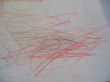
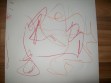 The first two pictures you see are of a three year old child using crayons and oil pastels to express thoughts, ideas and feelings. Joy is the one emotion that for sure comes to mind.
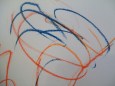
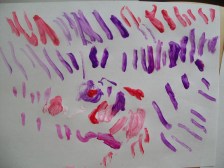
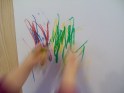 The next two pictures show not only vibrant color, but two hands in motion as “scribbles” are being created with excitement! The one on the far left is more controlled with large round circles where the oil pastel did not leave the page until a color change was desired. Large and fine motor skills are used along with hand and eye coordination skills.
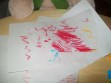
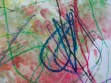
Experimentation with drawing occurs every time a child picks up a crayon and expresses his/ her feelings and thoughts. Using two different art mediums helped this young child return to a project which caused the child to be more thoughtful about what she wanted to draw and the colors she wished to use. Each drawing/ writing is unique to this child and unique in itself. These early literacy works are examples of the varying thoughts and emotions running through the child’s mind as she was drawing/ writing.
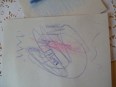
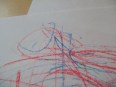 Writing on small, medium, large and even shapes of paper or different textures of paper can help to stimulate internal motivation to draw/ write. Different textures of writing surfaces give the child a chance to observe, feel and sense how to adjust his/ her fine motor movements in order for the drawing/ writing to come out the way they would like or close to it. Many times there is no clear idea of what the drawing is, or if it is of an object, person, animal or place. Only when the child has a clear idea of those things or if we, the adults have asked or suggested, does the child give thought to the concept of their drawing/ writing being something specific.
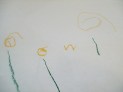
 The two pictures to the left are clearly flowers. This was a wonderful day in which I set up a provocation of a yellow rose along with paper and oil pastels. The child decided on her own to compare the colors she wanted to use with the flower and the stem before she began to draw the actual flower. From scribbles, to a clear and specific object! This did not happen over night, but the right circumstances presented themselves to this child and she felt the need to create two lovely representations of the yellow rose. The picture to the far left shows how she followed the path way the petals of a rose follow, and that is in a circular pattern. The attention to detail came directly from a three year old child with no prompting from me, her Teacher.
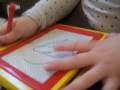
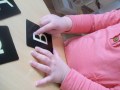 As children develop through the early literacy stage, which takes years, not months, days, or weeks to accomplish, scribbles become recognizable objects, and more interest is shown for actual writing and understanding letter symbols. This child chose to explore the sand letters after I had put them away, thinking she was not interested. Sand letters are a great tactile sensory experience and support the child’s journey to understanding what a letter symbol is and how it functions in the process of writing and reading. Having multiple mediums for children to express the desire to scribble/ write is important. I’m not a super fan of these little magnet sketch boards, yet they are the very thing this child loves to write on! So providing things that children choose and enjoy using while learning is important to pay attention to.

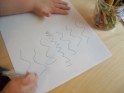 Do not be afraid to allow young three, four and five year old children to use pens. Young hands do very well with thin writing tools. Leave the chubby markers and fat crayons for the youngest people who are still grasping and pinching. Preschool aged children do not need direct instruction that is meant for k-12 school aged children. So over use of the underdeveloped muscles in the wrists do not have a chance to happen when children can choose when to use these tools and how to use them. As a Teacher, facilitator, mentor and support, my job is to model how I write properly, not force a child to do as I do. Model how to write during “teachable moments”. Teachable moments are times when you notice the child is interested in what you are doing and saying. I don’t go over board with modeling or suggesting. I observe the child as I model and suggest to gauge how interested or not interested he/ she is. So always be aware that as a Teacher, you are not on stage addressing empty minds and simply filling them with your words and actions. As a Teacher you are reading the behaviors, body language, and words of your students. How much information and when to offer it to a child depends on how much interest that child has. As a Teacher I am there for the child, to help him/ her learn at their own speed through the developmental journey.
I invite you to prepare your child for kindergarten readiness and for life long learning. When you are ready to take the step into preschool life, please feel free to email or call me. I would be happy to give you a tour of my small school and answer any questions you have on your mind about your child’s first school experiences.
The Marigold School of Early Learning is a morning preschool designed specifically for young children ages three to five. There are only eight spaces available each day because a small class size enables me to give your child the best early education possible. A play-based emergent curriculum inspired by the Reggio Emilia Approach to Education allows me to dive deeper into developing a curriculum tailored to your child’s specific needs. So rest assured, your child’s educations is very important to me as well as you.
Please share!
Heidi Scott, BA & MIT The Marigold School of Early Learning! :)


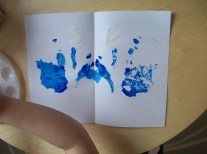
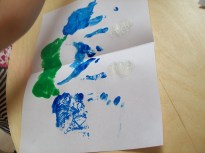
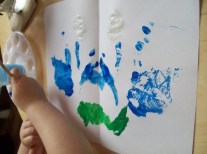
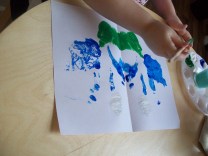
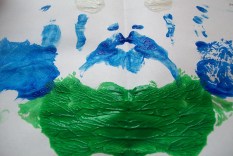 I was truly amazed at how quickly my student took to this lesson. The steps I modeled were repeated almost exactly. Where it changed was even better! Once this child painted, folded, smoothed and opened the paper and expressed happy surprise, more paint was then added and the paper was refolded and smoothed and opened! This process was repeated about two more times after this. I love how young minds take what we offer and use their own cognitive abilities to extend the learning. This student understood the concept and broke down the barrier of only painting once and folding. Repeating the steps allowed a far more creative and complex piece of artwork to emerge. Three year old minds are very intelligent and capable of many things if only allowed and given time to explore their own ideas!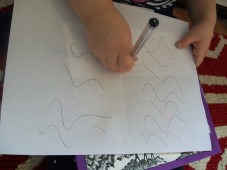
 Later in the morning this same child decided to try the line of symmetry technique with ink instead of paint. The paper was already folded from the painting lesson, so the child immediately wrote on either side of the line down the center. When finished a line was traced following the fold in the paper. The paper was then folded shut, smoothed and reopened with a surprised exclamation from the child! Now this child already proved understanding by the painting down above, so transferring the same information newly learned to another content area is excellent! This child knew full well that the ink is not like paint and that is why both sides of the line were drawn on. One of the fascinating things for me to see was the reaction was complete role-play or acting! Pretending to be surprised at what was created was just precious!


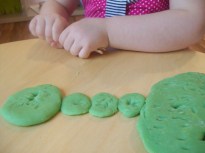
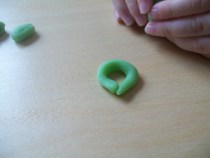
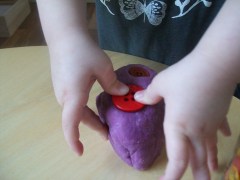 Play-dough is a staple in most early learning programs due to the fact that is is a wonderful open-ended way for young children to develop eye-hand coordination, strengthen fine motor skills and be as creative as they want! You don’t have to provide cookie cutters for perfect pictures in the dough. Allow children to form their own expectations with objects you may not normally think of to use. Incorporate colors so children continue to explore and discover not only real world shapes, but real world colors. We don’t always have to add traditional boxed curriculum ideas. Break down barriers on how to learn and allow the natural scientist to emerge! :)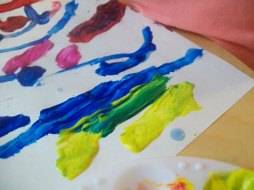



 The Marigold School of Early Learning