Preschools The Marigold School of Early Learning (Marigold)

Young minds and plants

101_5515

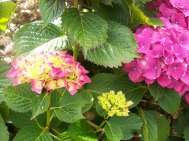
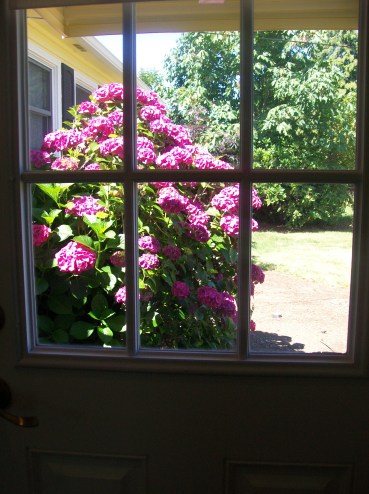
I’ve mention many times before in previous blog posts how nature is a great way for young children to learn many different skills.  Hydrangeas are one of those hardy flowers that never let me down as far as all the wonderful texture and visual discoveries there are to observe.  The leaves are dark to medium green, shiny, large, and the veins are very prominent which make for wonderful crayon rubbings and many more art infused projects.

The flower petals are clustered together and fit well and the violet color is so vibrant when they first bloom.  This particular type of hydrangea has a second stage of flower color.  Near the end of summer and into fall the flowers will change to a light green and dark red.  So this plant just keeps giving us many more opportunities to observe how nature keeps changing in front of our eyes!
101_5562

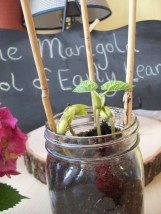
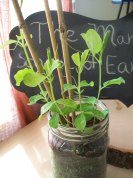
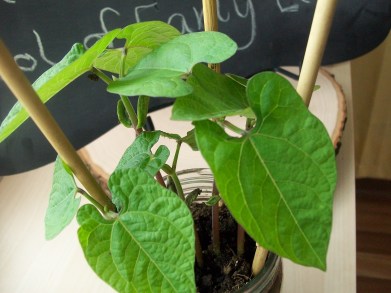
My second week bean sprouts are another great example of why nature is so useful for helping children form strong foundations for future learning.  Once again we have color, shape, multiple leaves and prominent veins.  The roots are not yet showing, but I’m sure they will in the next week of so.  And being a vegetable, children will see how beans first form, what they end up looking like and why we enjoy them.  Counting, color  and shape recognition, texture from the soil, leaves and eventually the bean itself are just a small example of what children can learn from this plant and others. I mustn’t forget patterning too! :)
101_5491

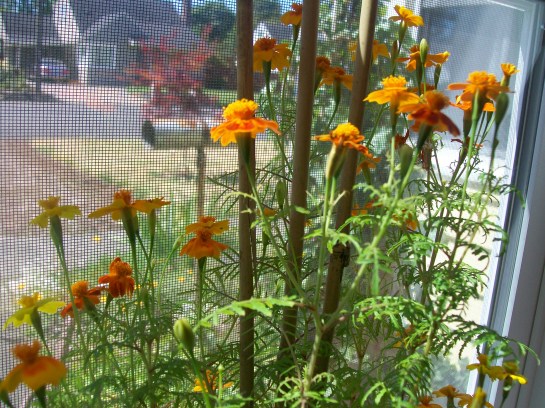
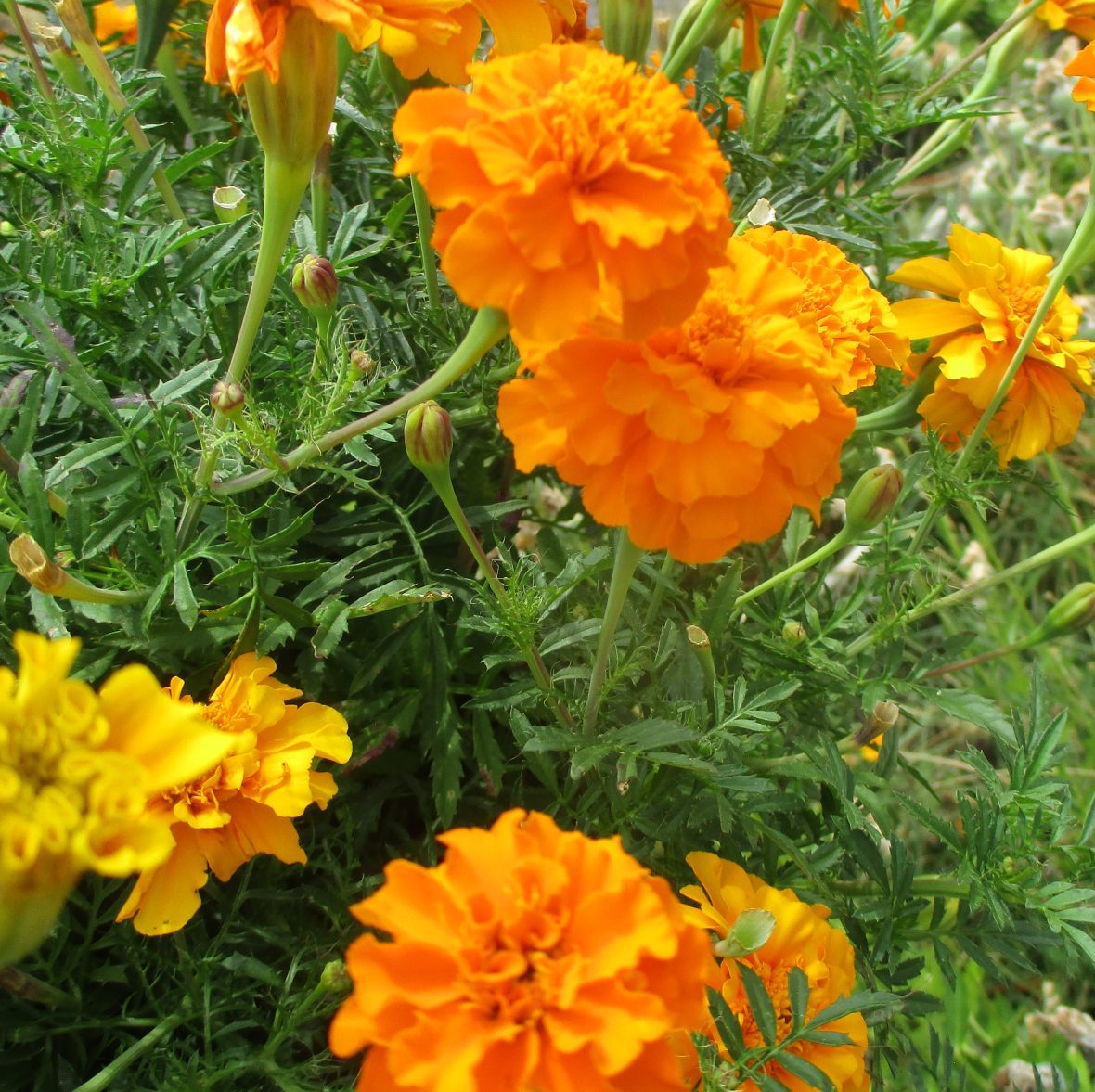
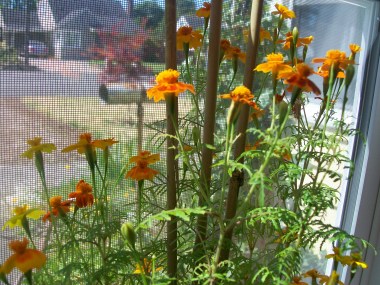
The mini marigolds are also wonderful examples of nature and the knowledge contained in each vegetative life.  These flowers not only offer differing colors of petals, but the leaves are a wonderful lacy work to count, feel, pattern and admire.  Being able to see the little buds form and then the flower bursting into something so lovely is also a good way to help young minds grasp the concept of change.  Many young children struggle with change, in their home lives, at school and any other areas in their lives in which they interact with people and the environment.  Change is an abstract concept somewhat and nature provides an easy concrete example. As adults we are always very much aware of how important routine with flexibility is and how crucial it is to pay close attention to the emotions  young children experience as things change that are not in their control.  I believe plants are a positive way to expose each to what change is and what it can mean.
101_5479

I also wanted to mention that young minds will assimilate a large amount of new vocabulary as they grow and are exposed to the differing forms of nature.  Modeling writing, writing  their words for them, accepting what they give,  and keeping growth charts and graphs of various sorts, will all support early literacy as children put on their science caps.  Integrative curriculum strengthens the whole process of questioning, experimenting, discovering, constructing and working as a team.  The summer season is here and I look forward to meeting new friends!  So come join me in a continued learning journey at The Marigold School of Early Learning! :)

Heidi Scott, BA & MIT


Preschools The Marigold School of Early Learning (Marigold)

Beans Sprouts week 2

101_5562  By week two of planting the bean seeds the growth is huge!  I realize beans are one of those vegetables that germinate quite quickly, yet it is still exciting to me. :)

Here is a look at the first pics I took.

101_5356 101_5494 101_5555

I will soon put up string so the runners with have a place to climb.  I hope my bean plant will actually have beans.  I worry since I am keeping them indoors.  However, not till this year did I ever grow things entirely indoors.  In the past I would have transplanted the little sprouts.  

101_5563  Please share your indoor or outdoor growing experiments! 

Heidi Scott, BA & MIT

The Marigold School of Early Learning :)


Preschools The Marigold School of Early Learning (Marigold)

Bean Sprouts!

101_5356 After planting some of the beans, I’ve been impatiently waiting for them to sprout!

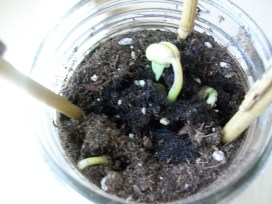
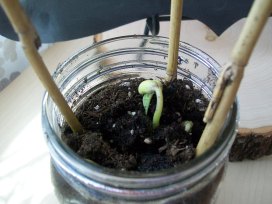
101_5493 Finally my impatience had a reward!  Little bean sprouts have emerged from the soil! :)

101_5494 The entire process of planting seeds from start to finish is my ideal way of incorporating such a nice concrete science project into our curriculum.  However, sometimes students can’t be present for the entire growing period.  So pictures are always great!  Keeping a record of how the seed grows and changes every couple of days is a good way to keep detailed growth observations.

101_5489 For this science project I will need to construct a climbing apparatus so the bean vines have a place to travel along instead of the short bamboo poles.  I also made sure to wait till they were at this stage to feed them just a little coffee grounds water.  Fertilizing indoor plants that usually live outside is extremely important as we found out with our snap peas and sweet pea flowers. If I remember I will also try beat juice water.  Anything that is organic and natural I prefer using.  After all, food that we grow goes right into our bodies and I want nothing harmful or questionable filtering into my plants.

101_5491

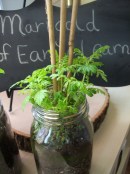
With my small marigold plant I also added some coffee grounds water.  I’ve noticed that being in jars I only need to water them every other day or every three days depending.  The green leaves are a bit too light green, so I’m hoping some coffee fertilizer will help them turn a richer shade of green.  Any other helpful hints out there? :)

Good luck with all of your gardening adventures this summer!  Share some pictures if you have any!  We would love to see them! :)

Heidi Scott, BA & MIT

The Marigold School of Early Learning


Preschools The Marigold School of Early Learning (Marigold)

Hydrangea Leaves

101_5411  We grew both small and large marigold flowers indoors this spring.  I love glass jars because we can see the long root system and have such easy visibility as the little seeds sprout and gradually turn into lovely flowers.

Hydrangea Leaf Provocation & Inspiration!

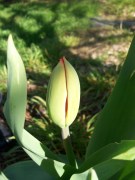
101_5439 As I run across ideas to try out for the summer I was so happy to see my hydrangea bush so full and pretty again this year!  Hydrangeas are so hardy! I thought I’d show you all a picture that captures the beginning buds as they turn into the lovely violet flowers!
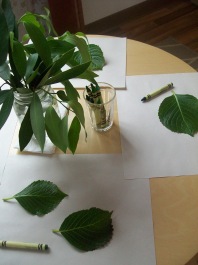
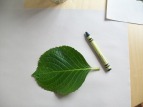
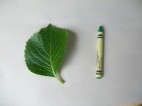
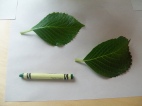
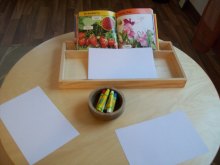
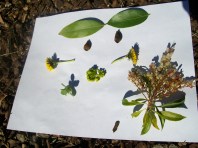
101_5428 I set up an inspiration table with leaves  from the tree I forgot what it’s name is and the hydrangea leaves from my bouquets.  When looking at plants I always notice the wide array of green shades, so I put out as many different shades of green crayons as I could find.  I then proceeded to arrange each picture in a different way.  I like to see if a child will notice and comment on the arrangement differences or if the child will simply push it aside and arrange it as they wish.

101_5424 101_5425 101_5426 101_5427

Children are free to crayon rub with these leaves because they are rough enough to show all the veins.  They can count the leaves and the veins, trace the leaf or draw it free hand if they are inspired to do so.  They can use each shade of green for whichever method they would like.  Using nature is wonderful for not only the visual appeal, but the exploration of how the leaf is constructed.  Counting comes into play not just with each leaf, but with the crayons too.  Children may also notice the ruffled edges and count each of those as well.

 The word “leaf” is only four letters long and can easily be added to a word wall as another commonly used word in the children’s vocabulary.  Young children already come to preschool with vocabulary they know, so I respect that they can assimilate many, many more words.  I do not expect reading and writing like a kindergarten or first grade aged child, however I believe it is important to expose young minds to our written language. And I have had three year old students in the past who have been able to spell, write and read.  So never put up barriers to a child’s natural capabilities, yet do not push if they are not yet developmentally ready.

Setting up this table I have kept in mind that it is a provocation.  I am trying not to have expectations as to what direction a child could go with this, but I look forward to how each will interpret this “inspirational provocation”.

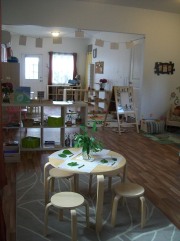
101_5375 Having large windows has been great because the natural light is so abundant! Please let me know what provocations you have recently set up using nature. :)

Heidi Scott, BA & MIT

The Marigold School of Early Learning


Preschools The Marigold School of Early Learning (Marigold)

Provocations and Emergent Curriculum

101_5351 Provocations are not lessons in which as a Teacher I expect students to immediately engage in.  Provocations are intended to catch a child’s eye, to spark an interest.  That being said, provocations are still concepts I want to teach children.  These concepts are presented in a way that is open and not closed.  Children have room to wonder, question, manipulate, incorporate and eventually construct meaning from either alone or with a fellow classmate.  I do not expect every child to know exactly how to read a provocation.  Sometimes I put out a provocation that I can think of multiple ways of using, yet a child may simply have no interest at that time.  I leave out provocations for the simple fact that on Monday there may be no apparent interest, yet on Tuesday there may be a lot of interest.  Sometimes, as with our own adult minds, children need time to mull over any ideas forming in their sub consciences. 

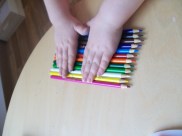
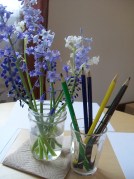
101_1219 Water color pencils were set out one day with paper yet this child had other ideas.  The pencils became part of a sensory exploration experiment.  I had not intended for this to happen, but I did not stop it from unfolding.  Why? Because there is no harm in a child exploring materials as long as no harm is coming to them, their friends or the environment.  These water color pencils are long cylinder shapes and they roll easily.  As a young child is exploring the concepts of shapes being able to roll materials and feel the different textures and motion from the objects is the very act of constructing knowledge.  I can scaffold this concept by adding more of the same shapes of objects or different shapes to see how this child interprets the knew data.  From watching, listening and paying attention to children’s needs for learning I am able to form curriculum from their emerging interests and needs.  Did I intend for this child to simply roll the water colored pencils?  No, I had the idea of this child drawing.  So this was a pleasant surprise that showed me where this child’s desire for knowledge was coming from.

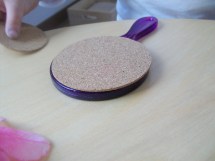
101_2779 Comparing the size and shape of the mirror with the cork shapes was not something I had originally thought of.  However, this child had a need to test her hypothesis and so she gathered the materials and went through with measuring. and comparing the size of both objects.  Constructing knowledge based on internal interest is more valuable than forcing concepts onto children.  When we take the time to respect young children and set up environments that promote learning, we are allowing children to learn naturally.  The concepts forced onto children through harsh academic environments do not respect children’s intelligence and desire to learn.  I’ve said this many times before, but learning is life.  Children naturally are insatiable learners.  When I listen to the needs of children I can be a support to their desire to learn.  Learning is for understanding and understanding comes with challenges that are attainable at each age and developmental level.  

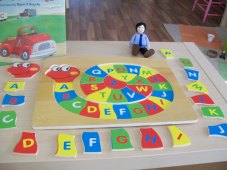
101_3098 I’ve set up alphabet puzzles as provocations before and no interest was taken.  Then one day interest is strong with these puzzles.  So I can choose to add more tactile letters, picture cards, books, poems or songs to extend the child’s interest.  Emergent curriculum comes directly from what children are doing.  My job is to make sure I really listen, watch and open communication with each child in order for me to support, extend and challenge when appropriate.  This doesn’t mean that children won’t possibly loose interest at some point, but the fact that I value each child’s desire to understand is one of the reasons I love being an Early Childhood Teacher.  I respect and value young minds and want to ensure they have a happy, healthy and developmentally appropriate early start to their long academic careers.

101_1976 If you implement an emergent style of curriculum please share your ideas and experiences.  I would love to learn from you too! :)

Heidi Scott, BA & MIT

Preschools The Marigold School of Early Learning (Marigold)

Jars and Bush Beans

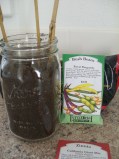
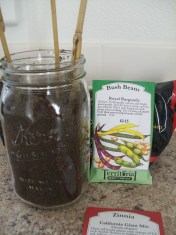
101_5356 With our snap peas finished growing and picked, we will be moving on to bush beans!  I love using jars because as the plant grows the children are able to see the roots and be a part of the whole process from start to finish. :)

Another thing about children planting the seeds is that their little hands fit perfectly inside the jars without getting stuck!  My hands are not too big, but I have difficulties getting seeds in the jars.  This year was the first year we planted seeds indoors and were able to see the growing process.  The snap peas were planted in March along with two types of marigold flowers and sweet pea flowers.  The small marigolds are doing great and the larger ones are still growing strong, yet not ready to bloom.  The sweet pea flowers had one lavender blossom and a few more buds, but they did not do as well.  They needed fertilizer badly.

I am excited to plant the beans and see what happens!  Please stay tuned with our blog to watch this process unfold.  Also, let us know what you all are planting this season! :)

Heidi Scott, BA & MIT 

Preschools The Marigold School of Early Learning (Marigold)

Provocation & Inspiration

101_1390 101_1415

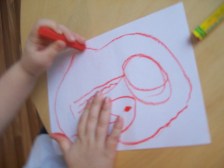
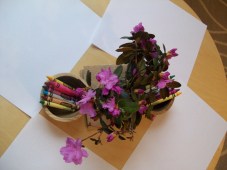
At first when I put out these lavender rhododendrons I didn’t think there would be any interest in using them as an inspiration to draw, due to some previous attempts with the resulting artwork being the polar opposite of the flowers.  However, I was pleasantly surprised to later look back at these pictures and find that yes, there was inspiration from these lovely flowers!  
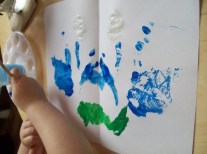
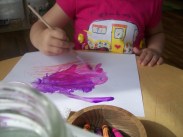
It is true that the colors of paint I put out were in the color family of the flowers, yet as we all know, a child will create whatever they wish despite what is in front of them.  When  I look at the painting on the right, I notice how all the colors used do represent the flowers.  The artistic expression of this child is of her own interpretation and developmental ability, which makes her picture that much more important and valued!

I respect children’s artwork because it comes directly from their minds and hearts.  Each child has the ability to create. And each picture created is a snapshot or window into that child’s emotions, creative ability at the time and life experiences. 

101_3883 101_2818

So my provocation of lavender flowers may not always inspire a child to paint or draw them, but it is there for children to explore if desired.  Each child can interpret that flower in a different way.  And I can be their to extend, assist or just be a silent observer when creativity strikes.  Sometimes a flower may not be the thing that is painted, but that flower sparked a memory of going to the park, planting seeds in a garden, or of the pretty flowers Mommy got for her birthday. When I open up dialogue with a child I become a scribe and show my respect for that child’s ideas, interests, experiences and creations.  Not to mention a whole lot of emotion is experienced while in the creative mode! :)

In what ways do you respect your young growing child or students?  How do you extend or support their interests?  Please share, I would love to learn from you too!

Heidi Scott, BA & MIT


Preschools The Marigold School of Early Learning (Marigold)

Spring shapes and Salt Dough!

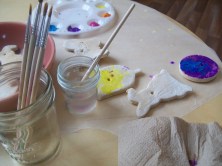
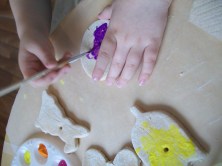
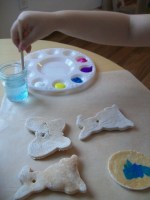
101_2010 101_2018  Spring is in full bloom!  We decided to try out salt dough! We made the dough and the spring shapes one day and then I baked them so they would be ready to paint the next class session. I recommend having more than one thing to bake the day you bake the salt dough.  It does take quite a long time in the oven at a low temp.  I think I made cookies and roasted some vegetables too! :)

101_2120 101_2118

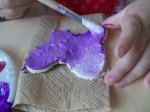
 We chose some fun bright spring like colors to paint the shapes and I must say they dried a bit faster than I expected.  If you choose to you can poke a hole in the shape so it can be hung later.  I found that the holes did close up a bit, so I used a sewing needle on one of them and that worked great.  

101_2223 I personally am not the biggest fan of projects in which young children use cookie cutters.  I like for children to use their hands and tools to create unique interpretations of their own, however this project was one I just couldn’t pass up.

The dangers with using preformed shapes is that many times young minds will be influenced in a negative way by using them.  Their perceptions of what they are capable of doing artistic wise becomes less confident because they compare everything they create to the perfect preformed shapes.  I’ve observed this happening subtly through the years.  It may not be obvious right away, but little by little children will start to compare their skill level to something that is artificial and perfect.  Due to that reason, I rarely use preformed shapes and prefer to support fine motor development and pure creativity through a child’s abilities wherever they are on the developmental continuum. I like to support children’s growing abilities and interests with artistic tools and “found objects” from the Loose Parts and Intelligent Play Things theory.  We use craft sticks, dominoes, buttons and scissors quite a bit.  We have even used shells. 

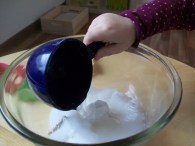
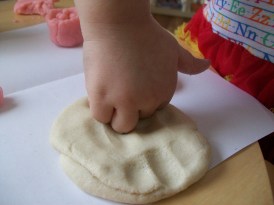
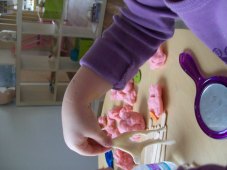
101_2311 There was some salt dough left over that I did not bake, so we were able to try a sensory experiment comparing play dough to the salt dough.  We found that the salt dough was really soft, pliable, gooey and when held in the air would slowly ooze down to the table.  At times the dough would hold an impression like finger prints and so forth and as it warmed up the impressions would stay for shorter periods of time.  Our play dough may be soft but it is not shiny and the salt dough was really shiny in comparison. :) 

101_2444  This child interpreted one of the times the salt dough oozed towards the table, as tights!  They do look like tights! :)  I love the spontaneous and pure interpretations young children express freely and openly!

If you have tried using salt dough please let us know what things you made from it and how the dough turned out.  We would love to know! :)


101_2271  

Heidi Scott, BA & MIT  

The Marigold School of Early learning! 


Preschools The Marigold School of Early Learning (Marigold)

Learning from Nature!

101_1957  Nature is full of learning opportunities both indoors and outdoors! :)  We read some plant books to become familiar with seeds to sprouts to plants.  I then set up some provocations to see if further interest would emerge.  Using a familiar flower as a plant example is a great base of knowledge to work off of and build onto.  We planted sweet peas indoors, so I was happy our book showed a picture of how they look when they bloom.  

With provocations the purpose is not for the child to do exactly what I want them to do.  The purpose is for the child to be curious enough to explore, question and create based on what inspires them.  The inspiration could come from the provocation in front of them or the provocation could spark a memory of an idea or experience.  So I do not interfere with the creative process young children’s minds need before they begin a project either small, large or long.  As they move through the project I can step in to support their inquiries and need for further explanations or materials.

101_2798 Our sweet peas finally grew!  Having a real life example to go with any pictures we have is always a great way to reach young concrete minds and build understanding.  When children are allowed to plant and take care of the growing seeds that sprout they learn so much more than what we tell them or read to them about.  Making sure to plan experiences to go along with any type of curriculum support is the most effective way for young minds to form understanding and continue to build onto the knowledge they’ve gained.  It doesn’t matter what amount or level of learning has taken place because the more experiences provided and allowed to happen will enable all children to learn things they did not know before.

101_2614 We collected some plant materials to create pictures on paper!  You never know what picture will emerge from the various plant materials found all around us.  These are not forever creations, so I like to take pictures so they can become a forever picture.  Sometimes if the quality of the picture is good enough the pictures can be printed and used for future provocations in different content areas.  Math, science, art and literacy can all be brought to light through natural pictures.  Give it a try and see what happens!  And don’t forget the dialogue either you hear between the children or you engage in with them is a huge part of the learning process.  Questioning, discussing, thinking out loud are all ways to communicate with young minds and for them to do the same.  Through conversation we learn so much of what children understand and what we as adults can do to support the learning journey. As a Teacher I have always opened my eyes and ears to learning from my students.  The give and take process of education keeps all of our minds active and ready for new knowledge.

101_2722 Learning is fluid and a part of being human.  Learning is not contained in a box.  Life is learning, so grasp each day and take the time to watch, listen and respect the young children in your life.  Children are like flowers in the sense that they grow and change.  Let’s work together to make sure their early years are full of learning opportunities that emerge and are planned through play! :)


101_2799    Heidi Scott, BA & MIT

The Marigold School of Early Learning 


Preschools The Marigold School of Early Learning (Marigold)

Line of Symmetry

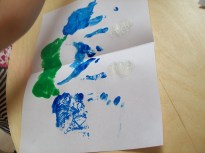
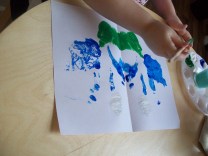
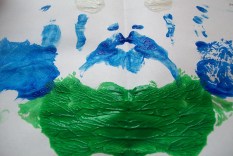
While reading Swimmy  By Leo Lionni we were inspired to make our own lovely pictures.  Line of symmetry is often seen in the story, so we picked three colors that reminded us of the ocean.  

101_1476  101_1483  101_1480

At first painting on the paper was very light, almost a hesitation as to where to put the paint, but as this child proceeded a lovely and creative picture emerged.  I did role model this lesson instead of leaving it out as a provocation.  Since line of symmetry is a new concept to young minds that have not experienced this before, it is perfectly fine to model.  

101_1484  101_1486   I was truly amazed at how quickly my student took to this lesson.  The steps I modeled were repeated almost exactly.  Where it changed was even better!  Once this child painted, folded, smoothed and opened the paper and expressed happy surprise, more paint was then added and the paper was refolded and smoothed and opened!  This process was repeated about two more times after this.  I love how young minds take what we offer and use their own cognitive abilities to extend the learning.  This student understood the concept and broke down the barrier of only painting once  and folding.  Repeating the steps allowed a far more creative and complex piece of artwork to emerge.  Three year old minds are very intelligent and capable of many things if only allowed and given time to explore their own ideas!

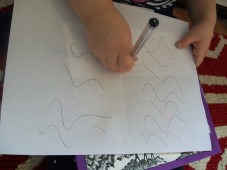
101_1509  101_1511  Later in the morning this same child decided to try the line of symmetry technique with ink instead of paint.  The paper was already folded from the painting lesson, so the child immediately wrote on either side of the line down the center.  When finished a line was traced following the fold in the paper.  The paper was then folded shut, smoothed and reopened with a surprised exclamation from the child!  Now this child already proved understanding by the painting down above, so transferring the same information newly learned to another content area is excellent!  This child knew full well that the ink is not like paint and that is why both sides of the line were drawn on.  One of the fascinating things for me to see was the reaction was complete role-play or acting!  Pretending to be surprised at what was created was just precious!

Art and Literacy are individual content areas of study.  These two contents are often paired together for learning, however the great part about this was that not only did an art form transfer to another content area so easily, but in a different part of the classroom.  Our brains learn concepts in multiple ways and pathways are extended and formed when we move around the room and face different directions when learning new things.  Even taking a new concept and trying it out at home, in the park anywhere else is a good sign learning for understanding is taking place.  Needless to say I was very excited to witness this spontaneous display of understanding!  I say spontaneous because we moved on to other things quickly after this.  Did I mention three year old children have a ton of energy!! :)

Heidi Scott, BA & MIT

The Marigold School of Early Learning! :)