Preschools The Marigold School of Early Learning (Marigold)

Jars and Bush Beans

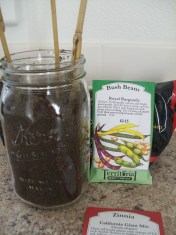
101_5356 With our snap peas finished growing and picked, we will be moving on to bush beans!  I love using jars because as the plant grows the children are able to see the roots and be a part of the whole process from start to finish. :)

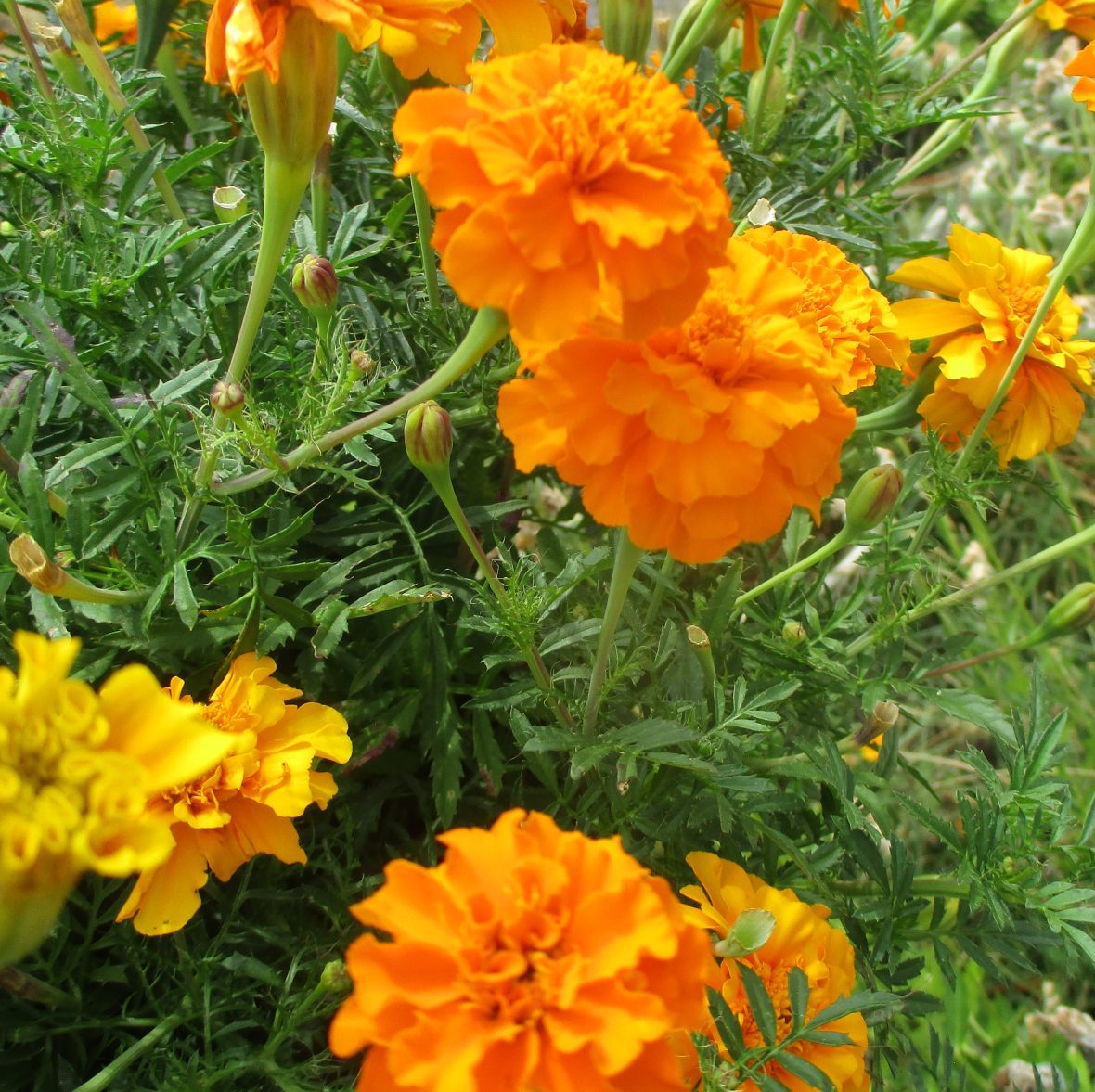
Another thing about children planting the seeds is that their little hands fit perfectly inside the jars without getting stuck!  My hands are not too big, but I have difficulties getting seeds in the jars.  This year was the first year we planted seeds indoors and were able to see the growing process.  The snap peas were planted in March along with two types of marigold flowers and sweet pea flowers.  The small marigolds are doing great and the larger ones are still growing strong, yet not ready to bloom.  The sweet pea flowers had one lavender blossom and a few more buds, but they did not do as well.  They needed fertilizer badly.

I am excited to plant the beans and see what happens!  Please stay tuned with our blog to watch this process unfold.  Also, let us know what you all are planting this season! :)

Heidi Scott, BA & MIT 

Preschools The Marigold School of Early Learning (Marigold)

Provocation & Inspiration

101_1390 101_1415

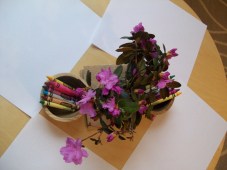
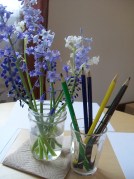
At first when I put out these lavender rhododendrons I didn’t think there would be any interest in using them as an inspiration to draw, due to some previous attempts with the resulting artwork being the polar opposite of the flowers.  However, I was pleasantly surprised to later look back at these pictures and find that yes, there was inspiration from these lovely flowers!  

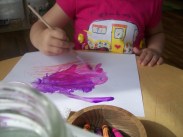
It is true that the colors of paint I put out were in the color family of the flowers, yet as we all know, a child will create whatever they wish despite what is in front of them.  When  I look at the painting on the right, I notice how all the colors used do represent the flowers.  The artistic expression of this child is of her own interpretation and developmental ability, which makes her picture that much more important and valued!

I respect children’s artwork because it comes directly from their minds and hearts.  Each child has the ability to create. And each picture created is a snapshot or window into that child’s emotions, creative ability at the time and life experiences. 

101_3883 101_2818

So my provocation of lavender flowers may not always inspire a child to paint or draw them, but it is there for children to explore if desired.  Each child can interpret that flower in a different way.  And I can be their to extend, assist or just be a silent observer when creativity strikes.  Sometimes a flower may not be the thing that is painted, but that flower sparked a memory of going to the park, planting seeds in a garden, or of the pretty flowers Mommy got for her birthday. When I open up dialogue with a child I become a scribe and show my respect for that child’s ideas, interests, experiences and creations.  Not to mention a whole lot of emotion is experienced while in the creative mode! :)

In what ways do you respect your young growing child or students?  How do you extend or support their interests?  Please share, I would love to learn from you too!

Heidi Scott, BA & MIT


Preschools The Marigold School of Early Learning (Marigold)

Spring shapes and Salt Dough!

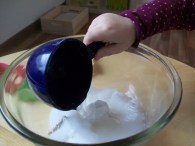
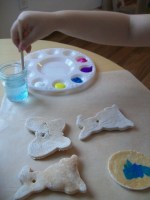
101_2010 101_2018  Spring is in full bloom!  We decided to try out salt dough! We made the dough and the spring shapes one day and then I baked them so they would be ready to paint the next class session. I recommend having more than one thing to bake the day you bake the salt dough.  It does take quite a long time in the oven at a low temp.  I think I made cookies and roasted some vegetables too! :)

101_2120 101_2118

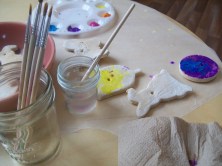
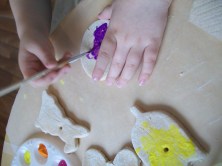
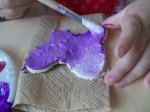
 We chose some fun bright spring like colors to paint the shapes and I must say they dried a bit faster than I expected.  If you choose to you can poke a hole in the shape so it can be hung later.  I found that the holes did close up a bit, so I used a sewing needle on one of them and that worked great.  

101_2223 I personally am not the biggest fan of projects in which young children use cookie cutters.  I like for children to use their hands and tools to create unique interpretations of their own, however this project was one I just couldn’t pass up.

The dangers with using preformed shapes is that many times young minds will be influenced in a negative way by using them.  Their perceptions of what they are capable of doing artistic wise becomes less confident because they compare everything they create to the perfect preformed shapes.  I’ve observed this happening subtly through the years.  It may not be obvious right away, but little by little children will start to compare their skill level to something that is artificial and perfect.  Due to that reason, I rarely use preformed shapes and prefer to support fine motor development and pure creativity through a child’s abilities wherever they are on the developmental continuum. I like to support children’s growing abilities and interests with artistic tools and “found objects” from the Loose Parts and Intelligent Play Things theory.  We use craft sticks, dominoes, buttons and scissors quite a bit.  We have even used shells. 

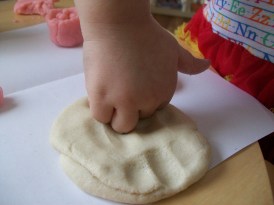
101_2311 There was some salt dough left over that I did not bake, so we were able to try a sensory experiment comparing play dough to the salt dough.  We found that the salt dough was really soft, pliable, gooey and when held in the air would slowly ooze down to the table.  At times the dough would hold an impression like finger prints and so forth and as it warmed up the impressions would stay for shorter periods of time.  Our play dough may be soft but it is not shiny and the salt dough was really shiny in comparison. :) 

101_2444  This child interpreted one of the times the salt dough oozed towards the table, as tights!  They do look like tights! :)  I love the spontaneous and pure interpretations young children express freely and openly!

If you have tried using salt dough please let us know what things you made from it and how the dough turned out.  We would love to know! :)


101_2271  

Heidi Scott, BA & MIT  

The Marigold School of Early learning! 


Preschools The Marigold School of Early Learning (Marigold)

Learning from Nature!

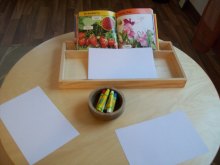
101_1957  Nature is full of learning opportunities both indoors and outdoors! :)  We read some plant books to become familiar with seeds to sprouts to plants.  I then set up some provocations to see if further interest would emerge.  Using a familiar flower as a plant example is a great base of knowledge to work off of and build onto.  We planted sweet peas indoors, so I was happy our book showed a picture of how they look when they bloom.  

With provocations the purpose is not for the child to do exactly what I want them to do.  The purpose is for the child to be curious enough to explore, question and create based on what inspires them.  The inspiration could come from the provocation in front of them or the provocation could spark a memory of an idea or experience.  So I do not interfere with the creative process young children’s minds need before they begin a project either small, large or long.  As they move through the project I can step in to support their inquiries and need for further explanations or materials.

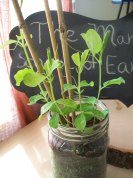
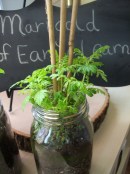
101_2798 Our sweet peas finally grew!  Having a real life example to go with any pictures we have is always a great way to reach young concrete minds and build understanding.  When children are allowed to plant and take care of the growing seeds that sprout they learn so much more than what we tell them or read to them about.  Making sure to plan experiences to go along with any type of curriculum support is the most effective way for young minds to form understanding and continue to build onto the knowledge they’ve gained.  It doesn’t matter what amount or level of learning has taken place because the more experiences provided and allowed to happen will enable all children to learn things they did not know before.

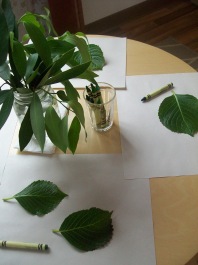
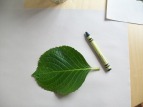
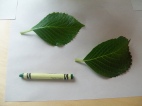
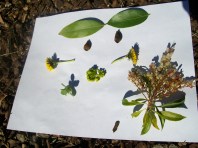
101_2614 We collected some plant materials to create pictures on paper!  You never know what picture will emerge from the various plant materials found all around us.  These are not forever creations, so I like to take pictures so they can become a forever picture.  Sometimes if the quality of the picture is good enough the pictures can be printed and used for future provocations in different content areas.  Math, science, art and literacy can all be brought to light through natural pictures.  Give it a try and see what happens!  And don’t forget the dialogue either you hear between the children or you engage in with them is a huge part of the learning process.  Questioning, discussing, thinking out loud are all ways to communicate with young minds and for them to do the same.  Through conversation we learn so much of what children understand and what we as adults can do to support the learning journey. As a Teacher I have always opened my eyes and ears to learning from my students.  The give and take process of education keeps all of our minds active and ready for new knowledge.

101_2722 Learning is fluid and a part of being human.  Learning is not contained in a box.  Life is learning, so grasp each day and take the time to watch, listen and respect the young children in your life.  Children are like flowers in the sense that they grow and change.  Let’s work together to make sure their early years are full of learning opportunities that emerge and are planned through play! :)


101_2799    Heidi Scott, BA & MIT

The Marigold School of Early Learning 


Preschools The Marigold School of Early Learning (Marigold)

Line of Symmetry

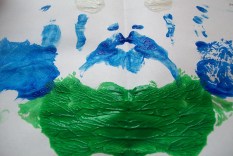
While reading Swimmy  By Leo Lionni we were inspired to make our own lovely pictures.  Line of symmetry is often seen in the story, so we picked three colors that reminded us of the ocean.  

101_1476  101_1483  101_1480

At first painting on the paper was very light, almost a hesitation as to where to put the paint, but as this child proceeded a lovely and creative picture emerged.  I did role model this lesson instead of leaving it out as a provocation.  Since line of symmetry is a new concept to young minds that have not experienced this before, it is perfectly fine to model.  

101_1484  101_1486   I was truly amazed at how quickly my student took to this lesson.  The steps I modeled were repeated almost exactly.  Where it changed was even better!  Once this child painted, folded, smoothed and opened the paper and expressed happy surprise, more paint was then added and the paper was refolded and smoothed and opened!  This process was repeated about two more times after this.  I love how young minds take what we offer and use their own cognitive abilities to extend the learning.  This student understood the concept and broke down the barrier of only painting once  and folding.  Repeating the steps allowed a far more creative and complex piece of artwork to emerge.  Three year old minds are very intelligent and capable of many things if only allowed and given time to explore their own ideas!

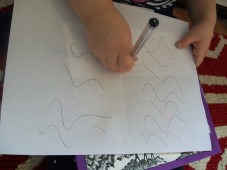
101_1509  101_1511  Later in the morning this same child decided to try the line of symmetry technique with ink instead of paint.  The paper was already folded from the painting lesson, so the child immediately wrote on either side of the line down the center.  When finished a line was traced following the fold in the paper.  The paper was then folded shut, smoothed and reopened with a surprised exclamation from the child!  Now this child already proved understanding by the painting down above, so transferring the same information newly learned to another content area is excellent!  This child knew full well that the ink is not like paint and that is why both sides of the line were drawn on.  One of the fascinating things for me to see was the reaction was complete role-play or acting!  Pretending to be surprised at what was created was just precious!

Art and Literacy are individual content areas of study.  These two contents are often paired together for learning, however the great part about this was that not only did an art form transfer to another content area so easily, but in a different part of the classroom.  Our brains learn concepts in multiple ways and pathways are extended and formed when we move around the room and face different directions when learning new things.  Even taking a new concept and trying it out at home, in the park anywhere else is a good sign learning for understanding is taking place.  Needless to say I was very excited to witness this spontaneous display of understanding!  I say spontaneous because we moved on to other things quickly after this.  Did I mention three year old children have a ton of energy!! :)

Heidi Scott, BA & MIT

The Marigold School of Early Learning! :)


Preschools The Marigold School of Early Learning (Marigold)

Drawing and Writing at a young age!

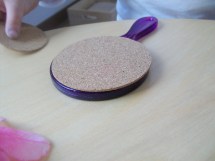
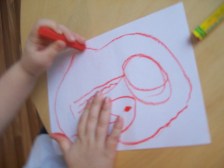
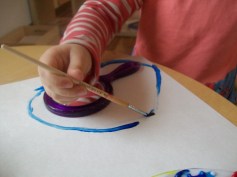
101_0778 This child is three and a half and found that after examining her face she needed to trace the mirror she had been using.  She has been exploring the shape of a circle and the concept of “round”.  This is another extension to her first inquiry.  Every time this child explores the concept of “round” she does so in a way that is tactile and concrete.  Building her understanding by using her senses.  Next her hand is traced.  And I did not inspire these learning experiences.  This child wanted to paint so we set it up and away she went with her own ideas.

This child is in between the early literacy stage of scribbles to symbolic representation of objects, thoughts and ideas. Literacy development takes years and is not a process to be rushed or forced.  As a Teacher it is my job to create and set up an environment that allows children to naturally engage in ways to express themselves.  Allowing the developmental process of learning to happen through “play”.  I can add, extend and dialogue with each child to find where he/ she is on the literacy and artistic journey.

Going back and forth between the scribble stage and symbolic representation is normal development and is a process we do not need to rush.  I love to observe, listen and question to find out how to add more challenging materials and curriculum that supports the early literacy and artistic development emerging before my eyes.  The letter “K” and “I” are represented above.  This did not happen due to my influence though, it happened out of pure chance.  And this child took time to really examine what she had created.  I did not comment for fear she was not ready for these symbols to have meaning.  If by chance she wasn’t ready, they would soon be covered up with more paint.  So be careful about commenting on a child’s work.  We want to respect their free expression without our bias.

101_0890 Play-dough is a staple in most early learning programs due to the fact that is is a wonderful open-ended way for young children to develop eye-hand coordination, strengthen fine motor skills and be as creative as they want!  You don’t have to provide cookie cutters for perfect pictures in the dough.  Allow children to form their own expectations with objects you may not normally think of to use.  Incorporate colors so children continue to explore and discover not only real world shapes, but real world colors.  We don’t always have to add traditional boxed curriculum ideas.  Break down barriers on how to learn and allow the natural scientist to emerge! :)

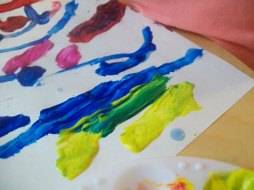
101_0805 By only placing primary colors on the table at first, this child created green and purple was next!  The look of pure joy and discovery on this child’s face made me so happy! Her art work is so creative, and again is showing the transition from scribble to symbolic representation.

Scribble writing can be a fascinating process of literacy development to observe and be a part of .  The attention to detail this child gives is a sign of internal interest.  Exploring writing in a way that she interprets at a young age, then exploring shapes through her scribbles and even taking time to feel the rolling motion of colored pencils all support and extend this child’s beginning writing and artistic talents.  And along the way she is gaining understanding of shapes and colors too.  Learning does not stop at one content area.  Learning is fluid and interacts to enable children to tap into a world of knowledge as they grow and discover.

Support your child’s need to learn by enrolling them in a quality preschool program.  And do some research to find out what theories are being implemented in the programs you are looking at.  Do not just go by a worksheet and primary colors.  Really take the time to learn about early learning theories and the ones that resonate most with your outlook on life.  

101_0287  Heidi Scott, BA & MIT

The Marigold School of Early Learning! :)


Preschools The Marigold School of Early Learning (Marigold)

A Window into Early Literacy Development

Take a moment to peer into our window of early learning here at The Marigold School of Early Learning!  

Drawing is early writing.  Every time a young child of three, four and five picks up a crayon or pen they begin to draw their thoughts, ideas and feelings.  The “scribbles” we often see, and many have dismissed, is really a very important stage of early literacy development for all young children.  Support young minds by allowing them to have access to crayons, oil pastels, pens, markers, colored pencils, chalk and much more!  Allow art to be the medium in which a young mind can express feelings, understandings and curiosity.
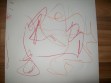
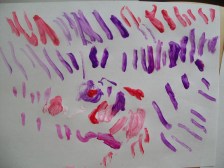
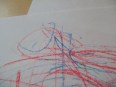
100_8642   100_8277  The first two pictures you see are of a three year old child using crayons and oil pastels to express thoughts, ideas and feelings.  Joy is the one emotion that for sure comes to mind.
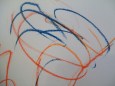
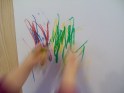
100_9593  100_8807  The next two pictures show not only vibrant color, but two hands in motion as “scribbles” are being created with excitement!  The one on the far left is more controlled with large round circles where the oil pastel did not leave the page until a color change was desired.  Large and fine motor skills are used along with hand and eye coordination skills.
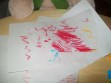
100_8331100_8814
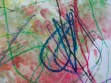
Experimentation with drawing occurs every time a child picks up a crayon and expresses his/ her feelings and thoughts.  Using two different art mediums helped this young child return to a project which caused the child to be more thoughtful about what she wanted to draw and the colors she wished to use.  Each drawing/ writing is unique to this child and unique in itself.  These early literacy works are examples of the varying thoughts and emotions running through the child’s mind as she was drawing/ writing.
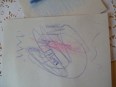
    100_9508 100_9189  Writing on small, medium, large and even  shapes of paper or different textures of paper can help to stimulate internal motivation to draw/ write.  Different textures of writing surfaces give the child a chance to observe, feel and sense how to adjust his/ her fine motor movements in order for the drawing/ writing to come out the way they would like or close to it.  Many times there is no clear idea of what the drawing is, or if it is of an object, person, animal or place.  Only when the child has a clear idea of those things or if we, the adults have asked or suggested, does the child give thought to the concept of their drawing/ writing being something specific.
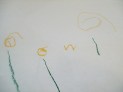
100_9849  100_9850  The two pictures to the left are clearly flowers.  This was a wonderful day in which I set up a provocation of a yellow rose along with paper and oil pastels.  The child decided on her own to compare the colors she wanted to use with the flower and the stem before she began to draw the actual flower.  From scribbles, to a clear and specific object!  This did not happen over night, but the right circumstances presented themselves to this child and she felt the need to create two lovely representations of the yellow rose.  The picture to the far left shows how she followed the path way the petals of a rose follow, and that is in a circular pattern.  The attention to detail came directly from a three year old child with no prompting from me, her Teacher.  
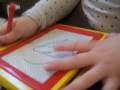
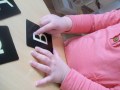
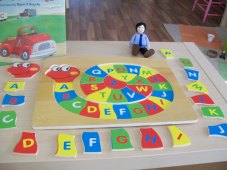
100_8627  101_0108 As children develop through the early literacy stage, which takes years, not months, days, or weeks to accomplish, scribbles become recognizable objects, and more interest is shown for actual writing and understanding letter symbols.  This child chose to explore the sand letters after I had put them away, thinking she was not interested.  Sand letters are a great tactile sensory experience and support the child’s journey to understanding what a letter symbol is and how it functions in the process of writing and reading.  Having multiple mediums for children to express the desire to scribble/ write is important.  I’m not a super fan of these little magnet sketch boards, yet they are the very thing this child loves to write on!  So providing things that children choose and enjoy using while learning is important to pay attention to.

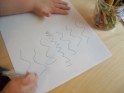
101_0113   100_9774  Do not be afraid to allow young three, four and five year old children to use pens.  Young hands do very well with thin writing tools.  Leave the chubby markers and fat crayons for the youngest people who are still grasping and pinching.  Preschool aged children do not need direct instruction that is meant for k-12 school aged children.  So over use of the underdeveloped muscles in the wrists do not have a chance to happen when children can choose when to use these tools and how to use them.  As a Teacher, facilitator, mentor and support, my job is to model how I write properly, not force a child to do as I do.  Model how to write during “teachable moments”.   Teachable moments are times when you notice the child is interested in what you are doing and saying.  I don’t go over board with modeling or suggesting.  I observe the child as I model and suggest to gauge how interested or not interested he/ she is.  So always be aware that as a Teacher, you are not on stage addressing empty minds and simply filling them with your words and actions.  As a Teacher you are reading the behaviors, body language, and words of your students.  How much information and when to offer it to a child depends on how much interest that child has.  As a Teacher I am there for the child, to help him/ her learn at their own speed through the developmental journey.

I invite you to prepare your child for kindergarten readiness and for life long learning.  When you are ready to take the step into preschool life, please feel free to email or call me.  I would be happy to give you a tour of my small school and answer any questions you have on your mind about your child’s first school experiences.  

The Marigold School of Early Learning is a morning preschool designed specifically for young children ages three to five.  There are only eight spaces available each day because a small class size enables me to give your child the best early education possible. A play-based emergent curriculum inspired by the Reggio Emilia Approach to Education allows me to dive deeper into developing a curriculum tailored to your child’s specific needs.  So rest assured, your child’s educations is very important to me as well as you. 

Please share!

Heidi Scott, BA & MIT    The Marigold School of Early Learning! :)


Preschools in Vancouver, WA, Preschools The Marigold School of Early Learning

Green Apple Cinnamon Play dough

100_9472

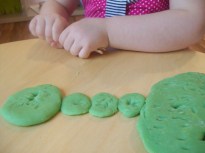
Apple cinnamon play dough not only smells good, but this batch turned out super smooth and very malleable! Notice the above picture is of a young child starting with a medium sized flat circle of dough and then following it are three small ones with the last being super large.  This child started each piece by rolling each into a ball and then using both elbows, flat hands and her stomach to smash the dough flat.  Comparing the size difference between circles was not a Teacher directed provocation.  This child chose on her own to compare the sizes of the five circles she made herself.  Each time a child creates or constructs he/ she is cognitively and physically forming knowledge about that object and shape.  The young mind takes into account the smell, color, texture and how this medium changes and in what ways.  What better way to really understand shapes than to actually create them from a material designed just for young hands and minds.
100_9534

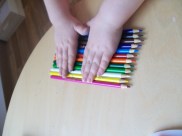
The next day apple cinnamon play dough was of great interest again, but more use was made with the adjoining craft sticks.  This time following a similar theme as above, this child chose to line up the sticks side by side. Comparing the same size and shape of each stick was the purpose.  And it was entirely the child’s idea.  Compare and contrast is also a concept that neatly fits into shape building.  Children explore the world around them by using tactile senses, eyesight, hearing, and movement as well as oral and sign language.  The whole child is engaged and the whole mind constructs the building blocks necessary for further academic learning.

100_9527
 

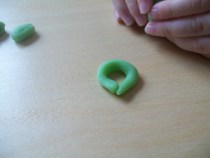
Small hands formed the letter “O”.  This “O” is for now a representation of my name.  Yes, it is not a letter in my name, but it is a start!  Emergent curriculum happens when young minds show internal interest and motivation to understand.  My job is to make sure to support and draw out the knowledge from within and add to it as we go through our preschool journey.


Heidi Scott, The Marigold School of Early Learning

Preschools in Vancouver, Preschools in Vancouver, WA, Preschools The Marigold School of Early Learning

Play Based Learning

2008-01-01 12.33.46  2008-01-01 12.34.04

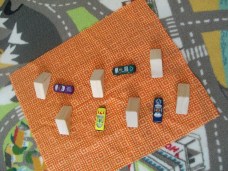
Cars and Blocks! :)  A three year old child decided that cars and blocks go nicely together and so began construction of a large one story building and some nice parking spots for cars.  And some cars park upside down. 

2008-01-01 12.34.42  I absolutely love how this child decided the parking spots should be on tall polls!  What do you think, is this the future of parking?  Maybe when cars fly like on the “Jetsons”? :)  Again mathematics and yes, physics are happening here.  This child put those cars on the pulls many times because gravity and balance claimed them.  Finally with much persistence they stayed put.  

2008-01-08 12.32.22 Moving along from cars and blocks, we find that using scissors to cut play dough is a great way to practice proper form and to strengthen our fine motor skills. This child follows a normal developmental pattern of going back and forth between using two hands to open and close the scissors and using one hand to cut and one to hold the object needing cutting.  As a mentor and guide in this situation, I modeled it once and let her try.  I encouraged her to keep trying when she felt it was too hard.  And she did wonderfully on her own! :)  The next time we used scissors for paper and for play dough she allowed me to model it once and she tried it until she felt satisfied.  

school pics 015  Heidi's School Pics 037  school pics 021

school pics 032  100_8047

Heidi Scott, BA & MIT  The Marigold School of Early Learning :) 


Come join us at The Marigold School of Early Learning!  We would love to play with new friends and together plan many exciting and new projects!

Preschools in Vancouver, Preschools in Vancouver, WA, Preschools The Marigold School of Early Learning

Following the Interest of a Child

Before we went on winter break I captured these pictures from the morning preschool sessions. :)


2015-12-08 08.08.34 Using puzzle pieces and a small wooden bowl I set up a provocation for the morning. :)
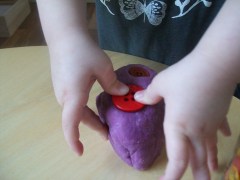
2015-12-08 08.08.50  Here is  a small example of emergent curriculum.  I based this provocation off of what I saw happening in class.  The week before a three year old child used dominoes and cars to create pictures, so I thought why not try the same idea using puzzle pieces.  Again, I do not expect and am not crushed if a child does not take interest in a provocation, it is a learning process for both myself and the students.

2008-01-07 13.12.45  What ended up happening is the puzzle pieces were moved to a piece of fabric in the Reading Corner and buttons were added to the bowl.  And that is when a child’s imagination took over! :)  The puzzle pieces and buttons became cat food!  And as I was documenting this emergent process I also observed a strong interest in cats.  This particular child has a pet cat, so no surprise with the interest.  This is leading me to adding a few more cat books to our Reading Corner and non-fiction ones as well.  

school pics 023  Here is an example of  little bear and a cat book.  Since interest in cat behavior is showing up in play so strongly, I am going to incorporate facts about cats and see what types of provocations I can set up to entice young children’s interests in cats or other animals.  The content areas that will be covered will include literacy, art, and science.  How interested the children are in the topic will determine how deep we go into the content areas, but I can tell you from years of experience that when young children are interested in a topic, deep and meaningful learning experiences are the result.  And the wonderful thing about it is that is all stems from the children and is not topics forced onto them by the Teacher. :)

Heidi Scott, BA & MIT

The Marigold School of Early Learning