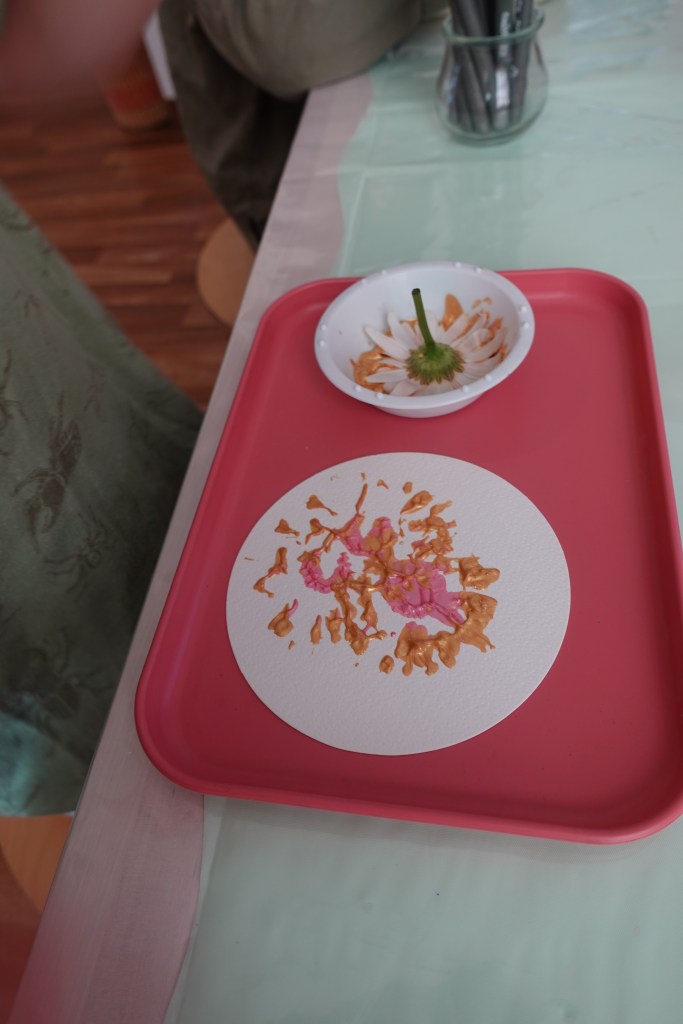
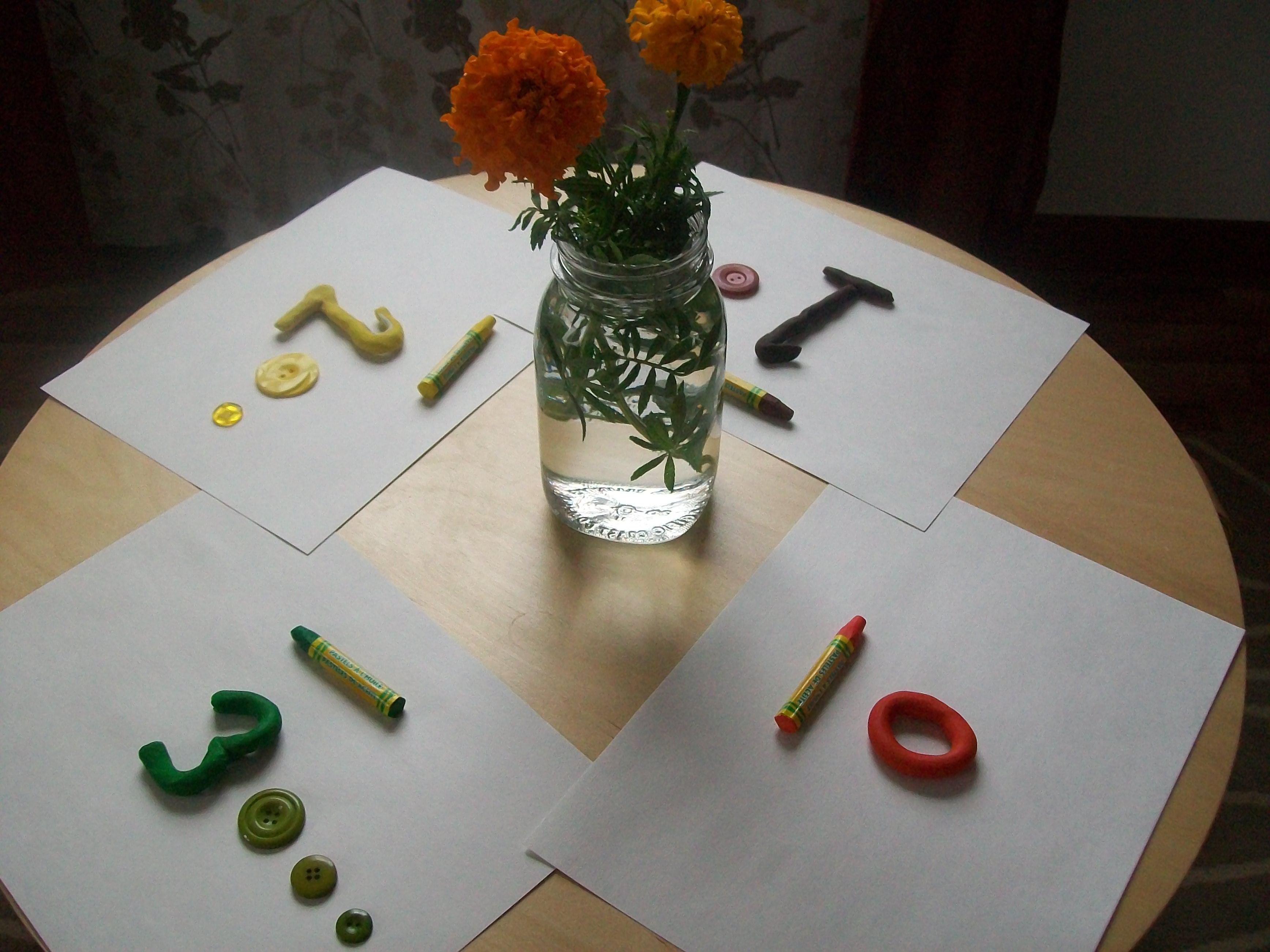
The thought of private schools brings to mind elite schools that serve children and families starting from preschool and going through eighth grade. However, private schools are not always elite, they can be down to earth like The Marigold School of Early Learning. Hello, my name is Heidi and I run a small early-learning program inspired by Reggio Emilia. My school is a private school and I teach children ages three to five. Families looking for a small home-like atmosphere, and want their children to learn naturally through play are welcome.
The culture of an early learning program is different across the board when it comes to schools. That is why it is a good idea to do a little research before joining any early learning program. Visit the school, talk to the teacher/ teachers, talk to families you know who have attended, and get the feel of the school before you jump on board. Most importantly, take time to think about what you want for your child and choose the school that best fits the needs of your child and the learning goals you have. Children create the majority of the school culture, yet parents and the teacher create the rest. Being open, honest, kind, and respectful to the teacher and other families is a must, I would say, for any school, but in our current society, I feel the need to put this out there.
A school culture of kindness is not just about being smiley and happy all the time, it means being thoughtful of others, your children first, and their classmates. Take some time to see the world as a new place to explore and not one that you are familiar with. When looking at things through the lens of a child their sensitivities come to the surface. Respect the time it takes for your child to accommodate to school life, meeting children their age in a group setting without Mom and Dad present for the first time. Respect the community your child is now forming with their classmates and the teacher. When your child enrolls in an early learning program, they are part of a community. A small community is just as important if not more so than a large community because children get to know each other better than if they were in a larger classroom. The teachers work hard to help your child adapt to the school culture which is powered by empathy, kindness, understanding, and communication. Once your child is part of a school community so are you. Please consider taking time to meet and get to know your child’s friends and their parents. Show your child you value the newly discovered independence they have been experiencing, and that you respect and care about the friendships they are building every time they go to class.
If the school culture doesn’t feel right to you, take the time to talk to the teacher about how you are feeling, and if a solution cannot be reached take the time to give your child closure. Respecting and understanding your child has made deep friendship connections and giving them time to say goodbye will help your child learn that ending a social/ educational relationship does not have to be traumatic. The school culture may be too intense for some families and they may want to be in a larger school setting so they do not feel the pressures of having to be a part of school events. As a teacher/ educator, I am acutely aware of how my mood can set the tone for my students, so I have to be mindful of how I am around your children at all times. Being mindful that as parents your mood influences a tone or message when you bring your child to school or pick them up at the end of class. Your child feels your mood and so does the rest of the class. Young children are people, and very perceptive people at that, they can sense if you are angry, sad, frustrated, happy, etc., so please keep that in mind when interacting with your child at school. Being kind, empathetic, and aware of the moment you are living in is a strong way to communicate with those around you, and is part of the school culture.
I have mentioned this many times and I will continue to, please know that the teacher is not one to pry into your personal lives or criticize how you are raising your child. The only factors involved in having open communication with your child’s teacher involve talking to the teacher about anything that has changed in your home environment either physically or emotionally that could be affecting your child in a negative way. The loss of a job, a separation or divorce, family or friends staying over for an extended period of time, moving house, anyone ill in the home, and the list goes on. Only communicate what you feel comfortable with the teacher. As a teacher, I can say, I am not a licensed therapist, and I am only concerned with what is directly affecting your child and inhibiting their learning emotionally, cognitively, socially, and sometimes physically at school. If your child is not able to participate in play, group meetings, or large motor exercises, I need to know what may be causing or contributing to these behaviors or issues. If I know more about what could be negatively impacting your child I can understand the situation and make informed decisions for how to help/ support your child. Open and two-way communication is vital so your child gets the most benefits out of being in school. Remember, that you are part of the school culture and community. Your ability to discuss issues you are facing with the teacher enables the teacher to provide support or suggest resources that may be helpful to you. Your willingness to be open, and honest and keep the door open for communication models to your child how you deal with life difficulties and how you find ways to work through them and solve them. Sometimes we can rely on ourselves alone, yet other times we need more people on board to help make life difficulties less daunting.
Young children are sensitive human beings who are still developing their complex emotions and social skills. Our combined empathy, understanding, and consistency with listening to them and keeping to routines will model to your child they are respected, valued, and cared for. Kindness comes first at The Marigold School of Early Learning. Families are valued and respected as a whole and if any member of a family does not feel comfortable about the school culture talking to the teacher is the first and best solution. If we can work together as partners in education we can accomplish just about anything. If we find that we cannot, then it is okay to move on to another early learning community. There is no shame, no ill will, and no reason to cause friction in one early learning environment when seeking a new one that could be a better fit. You and your child’s happiness and feelings of understanding and acceptance in a school culture/ community are important and I want anyone who wants to be at The Marigold School of Early Learning to join, stay, work together, and contribute to this wonderfully diverse and early learning culture. Remember, that you, the parents, and the child matter. You have a voice and I want to hear your voice. Respect and value this special time in your child’s life, for they are only these young ages once.
Sometimes, the school culture is more calm and quiet. If your child is high energy with more of an extrovert personality you may want to explore larger schools with bigger class sizes. The reason I mention this is because in smaller class sizes the children feel that energy radiating off your child, and every child reacts to this energy differently. Some children will thrive off of it, others will hide, and others will feel they are being assaulted. A trial period at any early learning school is a must for some children because you want to make sure your high-energy, happy child is able to thrive being themselves in the program you have chosen. Your child should not feel as if they did something wrong just because the environment was too small or not the right fit. The school culture is not just about the moods we as adults project and set for the children, it is about how children influence each other’s moods. A school culture that respects, values, and wants your child to fully be themselves is the right one, whether that be a small community or a large community. A trial period allows you to have more control over the early learning program you have chosen and gives you a judgment-free way to figure out if the school you choose for your child is the right fit. Smaller class sizes generally are the best option, but not all children thrive in smaller classes, they need larger ones to meet their needs. Just as there are different learning philosophies and approaches to education, there are different school cultures that will fit your child’s needs better. As the teacher of The Marigold School of Early Learning, I want children and families to join my community only if they truly want to be here and if their educational and developmental needs can be reached here. I will talk to you if I feel my school does not fit your goals for your child. Remember that you and your child can help create a positive school culture wherever you choose to enroll. You have a voice and so does your child, so don’t be afraid to communicate your ideas and goals. If it works out that my school is the right fit for you and your child, then I welcome you all with open arms! :)
Give your child time! Give your child time to adjust to school. Respect your child and show patience so your child can take the time they need to adjust to a huge life change. Early learning is usually a child’s first formal group experience and they need to be allowed to go through a gambit of emotions and social adjustments when adapting to a new environment, particularly one away from Mom and Dad. As a teacher, it is my job to communicate to you if I feel your child is not adjusting well and to figure out some solutions. If we as a team have not come up with good solutions then by all means a change in early learning communities may be the solution. I want to emphasize that your child is a small human being new to this world and it is important to give your child the necessary time they need to adjust to a big and positive change in their lives. Let us work together to make the transition to school a positive and peaceful experience.

















 The Marigold School of Early Learning